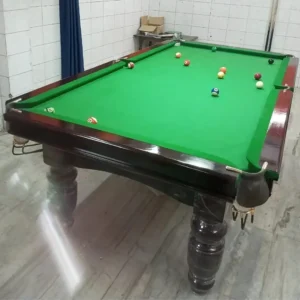
The Billiards Snooker Table: An In-Depth Exploration
A billiards snooker table stands as the grand stage for one of the most strategic and precise cue sports. While it shares lineage with other billiard games, its design is distinct, optimized for the unique challenges and nuances of snooker. From its imposing dimensions to the intricate details of its construction, every aspect of a snooker table is engineered to foster a game that demands skill, patience, and strategic foresight.
Origins and Evolution
Snooker originated in the second half of the 19th century in India, during the British Raj. British Army officers stationed there were fond of billiards and began devising variations of the game. The name “snooker” itself is believed to have originated from a term used for novice cadets, or “snookers,” reflecting the game’s evolution from more established billiard forms. Over time, the game and its accompanying equipment, including the table, were refined and standardized. The first reliable references to snooker being played in England emerge in the late 1880s, and by the early 20th century, it had gained significant popularity, leading to the development of dedicated snooker tables with specifications that remain largely consistent today.
Dimensions and Proportions: The Grand Scale of Snooker
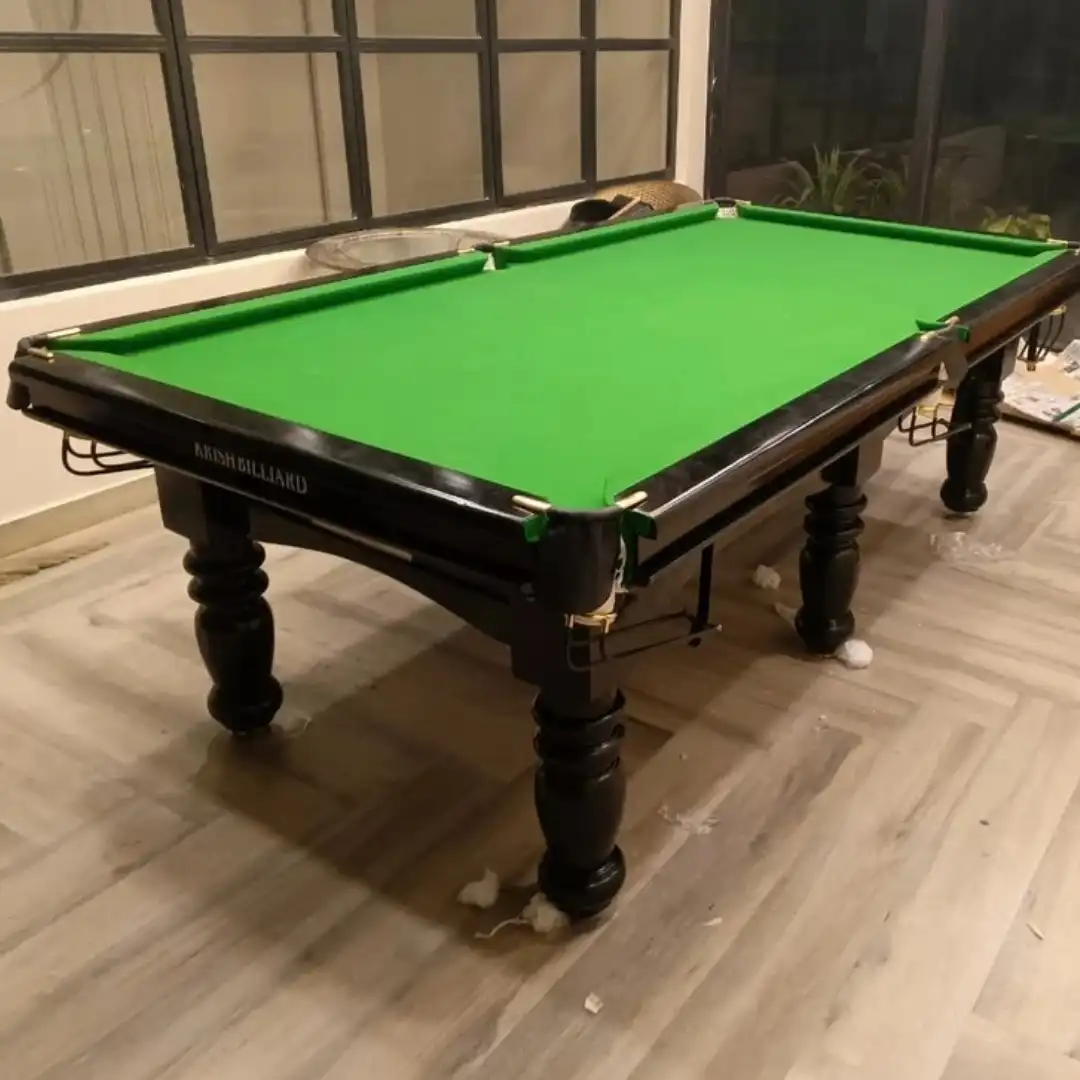
The most striking characteristic of a snooker table is its size. A full-size, tournament-grade snooker table measures 12 feet in length and 6 feet in width. This generous playing area translates to a playing surface of approximately 11 feet 8.5 inches by 5 feet 10 inches. This expansive layout is fundamental to the game’s strategic depth, requiring players to master long shots, precise positional play, and delicate safety shots. While full-size tables are the standard for professional play, smaller versions, such as 10-foot and 9-foot tables, are also available for homes or clubs with limited space, though they are generally considered to offer a different playing experience than a true 12-foot table.
Construction and Materials: The Foundation of Precision
The integrity and playability of a snooker table rely heavily on its construction and the quality of materials used.
- The Bed (Playing Surface): The cornerstone of any high-quality snooker table is its bed, made from thick, precision-ground slate. Typically, a full-size table uses five sections of slate, which are meticulously joined together and leveled to create an exceptionally flat and stable playing surface. This seamless surface is crucial for ensuring that balls roll true and predictably, a non-negotiable requirement for competitive play. Cheaper tables may use wood composite or MDF, but for professional standards, slate is indispensable due to its inherent flatness and resistance to environmental changes.
- The Frame: Supporting the immense weight of the slate bed is a robust hardwood frame. Timbers like mahogany, oak, or ash are commonly used for their strength and durability. The frame is engineered to provide unwavering support and stability, often featuring strong legs that may include adjustable levelers to ensure the table is perfectly horizontal.
- The Cloth (Baize): The playing surface is covered with a specialized cloth known as baize. Unlike the generally napless “speed cloth” sometimes found on pool tables, snooker baize is typically a blend of worsted wool and nylon (often around 90% wool, 10% nylon) and possesses a distinct directional nap. This nap, which runs from the baulk end towards the spot end of the table, is a critical element of the game. Shots played with the nap will roll faster and straighter, while shots against the nap will slow down and can affect ball spin and trajectory. Skilled players master the nuances of playing with and against the nap to control the cue ball and influence the outcome of shots. The cloth must be stretched taut and smooth to ensure consistent play.
- The Cushions (Rails): The cushions, also known as rails, are an integral part of the table’s playability. They are typically made from vulcanized rubber, a material chosen for its elasticity and consistent rebound properties. Snooker tables often use an L-shaped cushion profile (like the L77 profile), designed to provide a reliable and predictable bounce that is essential for executing complex shots, bank shots, and positional maneuvers. The cushions are clad in the same baize cloth as the playing surface.
- The Pockets: A hallmark distinction of snooker tables are their pockets. Compared to pool tables, snooker pockets are narrower and more rounded, making potting a ball significantly more challenging. The corner pockets are particularly tight, demanding a high degree of accuracy. The pockets are also generally deeper than those on a pool table to accommodate multiple balls during powerful breaks. There are six pockets: one at each corner and one in the middle of each long side.
The Snooker Ball Set and Cues
Beyond the table itself, the game requires specific equipment:
- The Balls: A standard snooker set comprises 22 balls:
- 1 white cue ball.
- 15 red balls, each valued at 1 point.
- 6 colored balls: yellow (2 points), green (3 points), brown (4 points), blue (5 points), pink (6 points), and black (7 points).
- The balls are slightly smaller than pool balls, with a diameter of 52.5 mm (2 1/16 inches), which is crucial for fitting into the narrower pockets.
- The Cues: Snooker cues are typically longer and thinner than pool cues, often ranging from 57 to 60 inches. They feature a smaller tip diameter (around 9.5 mm) compared to pool cues (around 13 mm). This design allows for greater precision and control, enabling players to impart spin and execute delicate shots essential for strategic play.
Marking and Layout
Snooker tables feature specific markings on the baize cloth. These include:
- The Baulk Line: A line drawn across the width of the table, typically about 29 inches from the bottom cushion.
- The “D”: A semi-circle marked on the baulk line with a radius of 11.5 inches, defining the area from which the cue ball must be played after certain fouls.
- The Spot Markings: Designated spots for the colored balls to be placed when they are re-spotted on the table. These include the black spot (on the vertical half-ball line at the bottom), the pink spot (at the apex of the triangle), the blue spot (at the center spot), and spots for the yellow, green, and brown balls.
The Significance of the Snooker Table
The snooker table is not merely a piece of sports equipment; it is an instrument that dictates the flow and strategy of the game. Its large size, narrow pockets, and the directional nap of the baize cloth all contribute to snooker’s reputation as a game of finesse, calculation, and mental fortitude. The challenge of potting balls accurately, controlling the cue ball, and setting up future shots on such a demanding surface is what makes snooker a captivating sport for players and spectators alike. A well-maintained, regulation snooker table is the bedrock upon which great snooker careers are built and legendary matches are played.