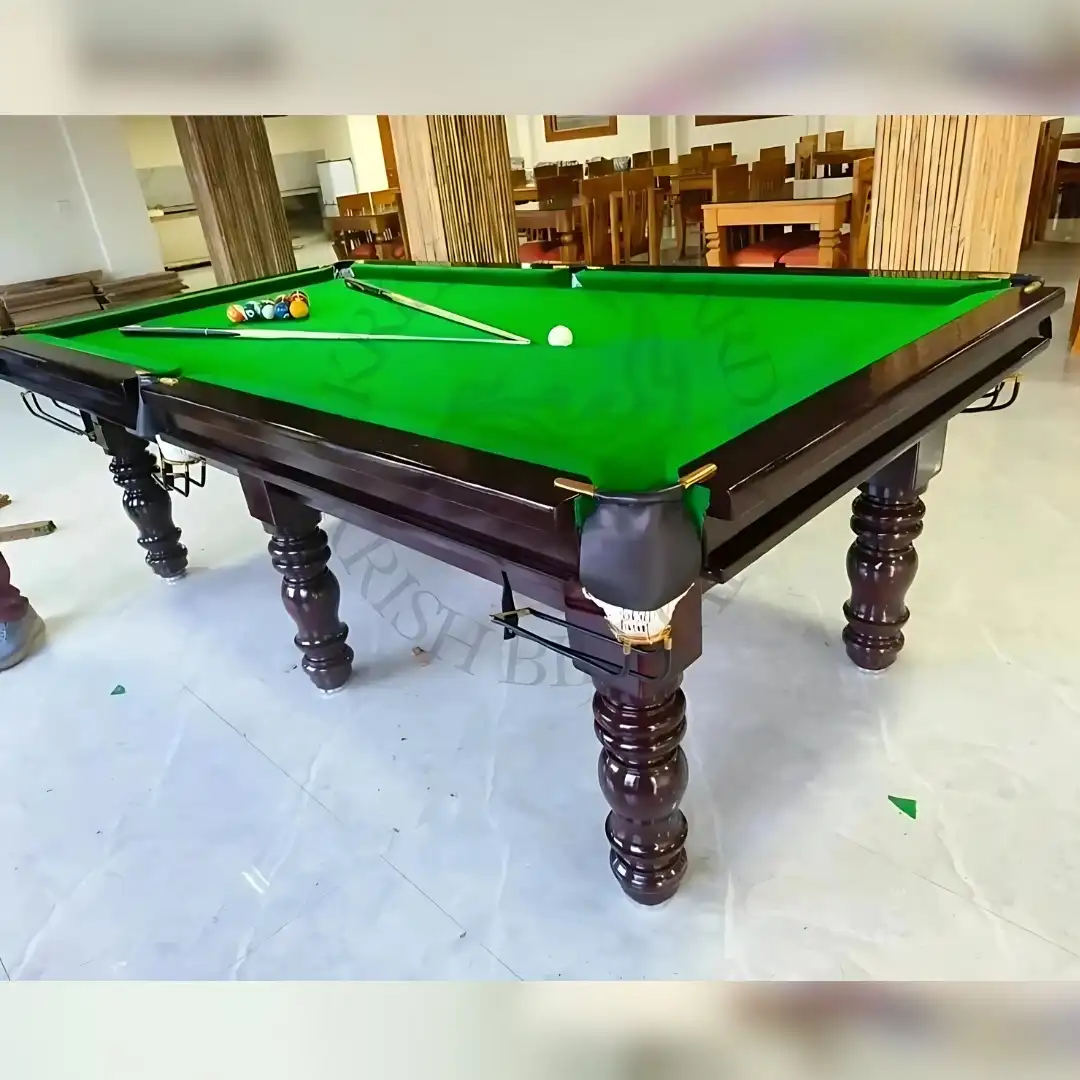
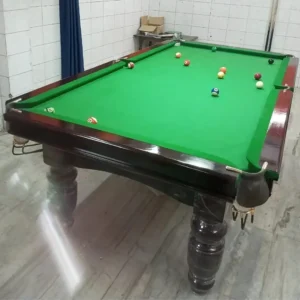
A billiards snooker table is a specialized piece of equipment designed for the game of snooker, a cue sport that originated in the late 19th century. While it shares some characteristics with a standard pool table, it is distinct in its dimensions, design, and the rules of the game played on it. Understanding the construction, materials, and features of a snooker table is key to appreciating the precision and skill required for the game.
The standard snooker table is significantly larger than a typical pool table. A full-size snooker table measures 12 feet by 6 feet, with a playing surface of 11 feet 8.5 inches by 5 feet 10 inches. This massive size provides a challenge for players, requiring them to use a variety of shots and angles to navigate the table. The table is typically made from solid hardwood, such as mahogany or oak, which provides a sturdy and stable foundation. The frame is supported by strong legs, often with adjustable feet to ensure the table is perfectly level.
The playing surface is covered with a high-quality baize cloth, usually a blend of wool and nylon. This cloth is different from the felt used on a pool table; it is designed to be faster and less prone to pilling. The nap of the cloth, which is the direction in which the fibers lie, is a critical factor in the game. Shots played with or against the nap can affect the ball’s speed and spin, adding another layer of complexity to the game.
The cushions, or bumpers, are another key component of a snooker table. They are made from vulcanized rubber, which provides a consistent and lively bounce. The cushions are set at a specific height and angle to ensure that balls rebound predictably. The pockets are a distinctive feature of a snooker table. They are narrower and more rounded than those on a pool table, making it more difficult to pot a ball. The pockets are also deeper, designed to hold multiple balls. The six pockets are located at each corner and in the middle of each of the long sides.
The bed of the table is made from a thick piece of slate, typically in three to five sections. Slate is used because it is an extremely flat, dense, and stable material that is not affected by temperature or humidity changes. The sections are carefully joined together and sanded to create a perfectly level playing surface. The slate is then covered with the baize cloth, which is stretched and stapled to the table’s frame.
The snooker table is not just a playing surface; it is a work of art. Many high-end tables feature intricate carvings, decorative inlays, and polished finishes. The craftsmanship that goes into a professional-grade snooker table is a testament to the long history and tradition of the game.
In addition to the table itself, a snooker table setup includes a set of specialized balls. The standard set includes 22 balls: one white cue ball, 15 red balls (each worth 1 point), and six colored balls (yellow, green, brown, blue, pink, and black, with values of 2, 3, 4, 5, 6, and 7 points, respectively). The game is played with a cue stick, which is typically longer and thinner than a pool cue. The snooker cue has a smaller tip, which allows for more precise shots and better control of the cue ball.
The popularity of snooker has led to the development of different sizes of tables to accommodate a wider range of players and spaces. In addition to the full-size 12-foot table, there are also 10-foot, 9-foot, and 8-foot versions. These smaller tables are often found in clubs, homes, and recreational centers. While the rules of the game remain the same, the smaller tables require different strategies and techniques.
The snooker table is a central part of the game’s culture and history. It has been the stage for some of the most memorable moments in cue sports history, from legendary matches to record-breaking breaks. The table’s unique design and features are what make snooker such a challenging and rewarding game to play.
The craftsmanship and attention to detail that go into making a snooker table are what separate it from other types of game tables. The selection of the finest materials, the precision of the construction, and the care taken in the finishing process are all essential to creating a table that can withstand the rigors of professional play. A high-quality snooker table is an investment that will provide a lifetime of enjoyment.
The snooker table is not just a piece of furniture; it is a symbol of a game that requires skill, strategy, and mental fortitude. It is a testament to the beauty and elegance of cue sports. The intricate design and construction of the table are a reflection of the complexity and artistry of the game itself. It is a game that is played on a stage that is a work of art. The table’s sleek lines, polished finish, and precise measurements are all designed to create the perfect playing experience.