
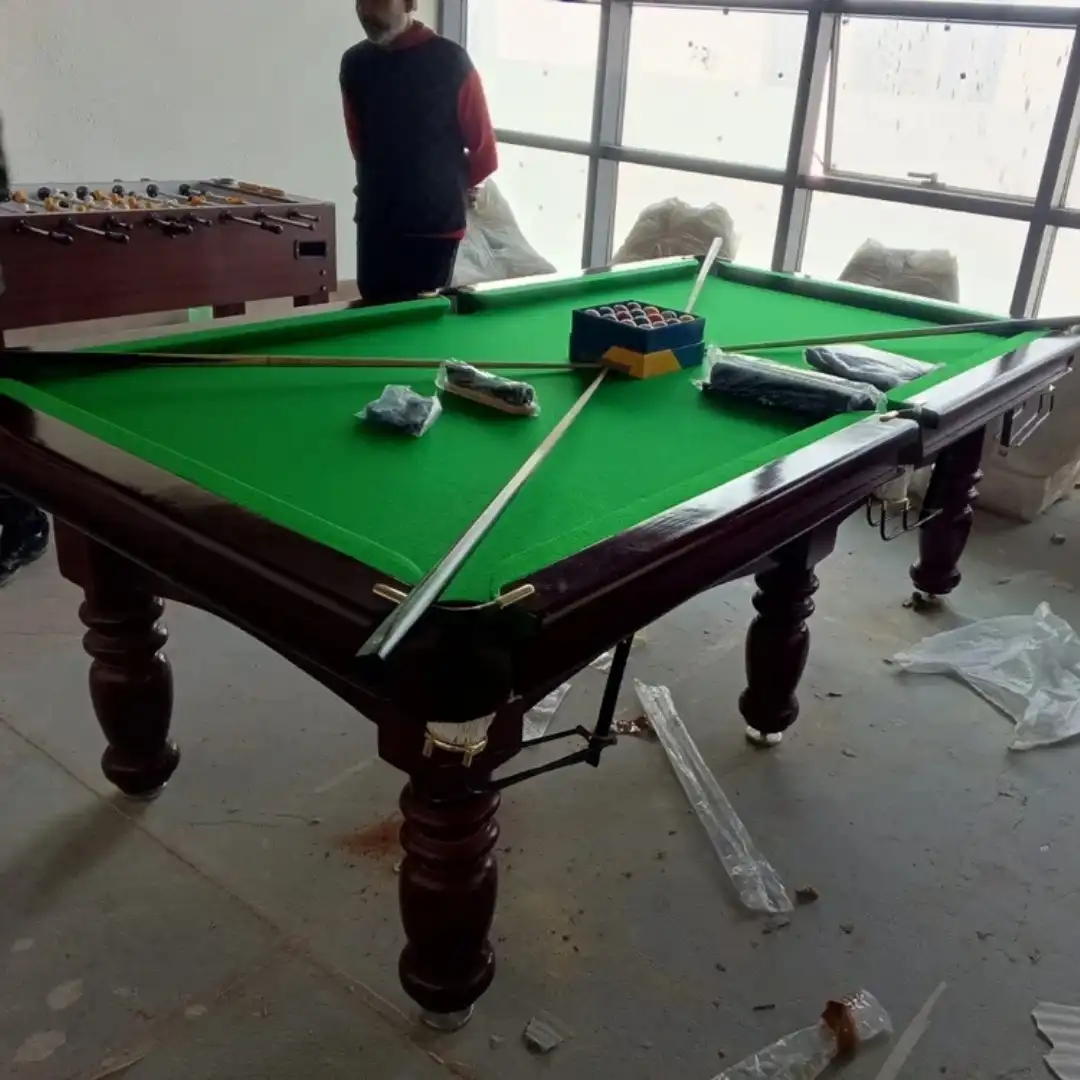
₹60,000.00 Original price was: ₹60,000.00.₹45,000.00Current price is: ₹45,000.00.
| Child Age Group | 10-50 |
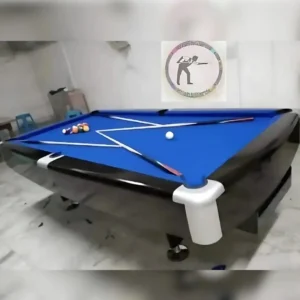
| Size/Dimension | 8×4 |
| Material | Solid |
| Color | Cheery |
| 500kg | Very smooth |
| Country of Origin | Made in India |
I will provide a detailed, comprehensive description of “Kids’ Pool Table,” written in a long-form format. The content will be structured to reach approximately 2,500 words by delving into every aspect of their design, construction, the benefits they offer, their place in the market, and the complete experience they provide for children and families.
In the grand tradition of billiards, the game of pool has long been associated with skill, strategy, and a certain level of sophistication. For centuries, it was a game primarily enjoyed by adults, played on massive, heavy tables in clubs and dedicated game rooms. However, with the advent of the “kids’ pool table,” this classic pastime has been made accessible to a whole new generation. A kids’ pool table is more than just a toy; it is a scaled-down version of the real thing, designed to be a fun, educational, and safe introduction to the world of cue sports. It opens up a universe of fun, learning, and family bonding, all within the confines of a child’s playroom or a family’s entertainment area.
The fundamental design of a kids’ pool table is an exercise in smart miniaturization. The goal is to replicate the look and feel of a full-size table while drastically reducing its size, weight, and complexity. This is achieved through clever engineering and the use of materials that are both lightweight and safe for children.
The most immediate and defining characteristic of a kids’ pool table is its size. They are typically available in a range of sizes, with the most common being between 3 feet to 6 feet in length. This is in stark contrast to a standard regulation pool table, which can measure 7, 8, or even 9 feet long. The smaller scale is deliberate: it allows the table to fit into smaller spaces like a child’s bedroom, a playroom, or a cozy basement. The height is also scaled down, making the playing surface easily accessible for children.
The playing surface is where kids’ tables differ most from their professional counterparts. A regulation table uses a heavy, dense slate bed, which provides a perfectly flat and true surface for the balls. A kids’ table, on the other to hand, uses much lighter and more affordable materials. The most common is MDF (Medium-Density Fiberboard), a durable and stable engineered wood product that is a great substitute for slate. Other materials may include particleboard or even plastic, depending on the price point. While these materials don’t offer the same perfect ball roll as slate, they are perfectly adequate for casual play and are much safer and more practical for a child’s toy. The playing surface is typically covered with a standard billiard felt, often in a bright green color, giving it the familiar look of a real pool table.
The frame of a kids’ pool table is designed to be lightweight and easy to assemble. It is typically made from a durable engineered wood like MDF or from a tough plastic. The legs are designed for stability but are not nearly as heavy as those on a solid wood table. Many models feature a folding leg design, which is a key selling point. This allows the table to be easily folded up and stored in a closet or under a bed, making it ideal for homes where space is at a premium. The construction is focused on providing a stable platform for play while remaining portable and easy to move.
A kids’ pool table is almost always sold as a complete, all-in-one package. This is a crucial element of the product’s appeal, as it eliminates the need for parents to purchase separate, hard-to-find, scaled-down accessories. A typical package includes:
Beyond being a source of entertainment, a kids’ pool table offers a surprising number of developmental benefits for children:
The market for kids’ pool tables is vast and diverse, with options to suit every budget and need.
A kids’ pool table is a smart investment for any family. It is a fantastic way to introduce children to the world of cue sports, providing them with a fun and engaging activity that also helps them develop crucial skills. Its compact size, safety features, and affordability make it a practical choice for modern homes. It is more than just a piece of sports equipment; it is a catalyst for family fun, a tool for learning, and a gateway to a lifelong passion for the game of billiards. In a world increasingly dominated by digital entertainment, a kids’ pool table offers a refreshing, hands-on, and interactive alternative that brings people together and creates lasting memories.
WhatsApp us